
Limit common transients
A correctly selected and installed SPD can reduce the voltage stress that brief surges place on wiring and connected electronics.
Independent whole-home surge protection guidance
Understand the protection layers, compare devices by electrical fit, and prepare for a qualified installation without unsafe do-it-yourself panel work.
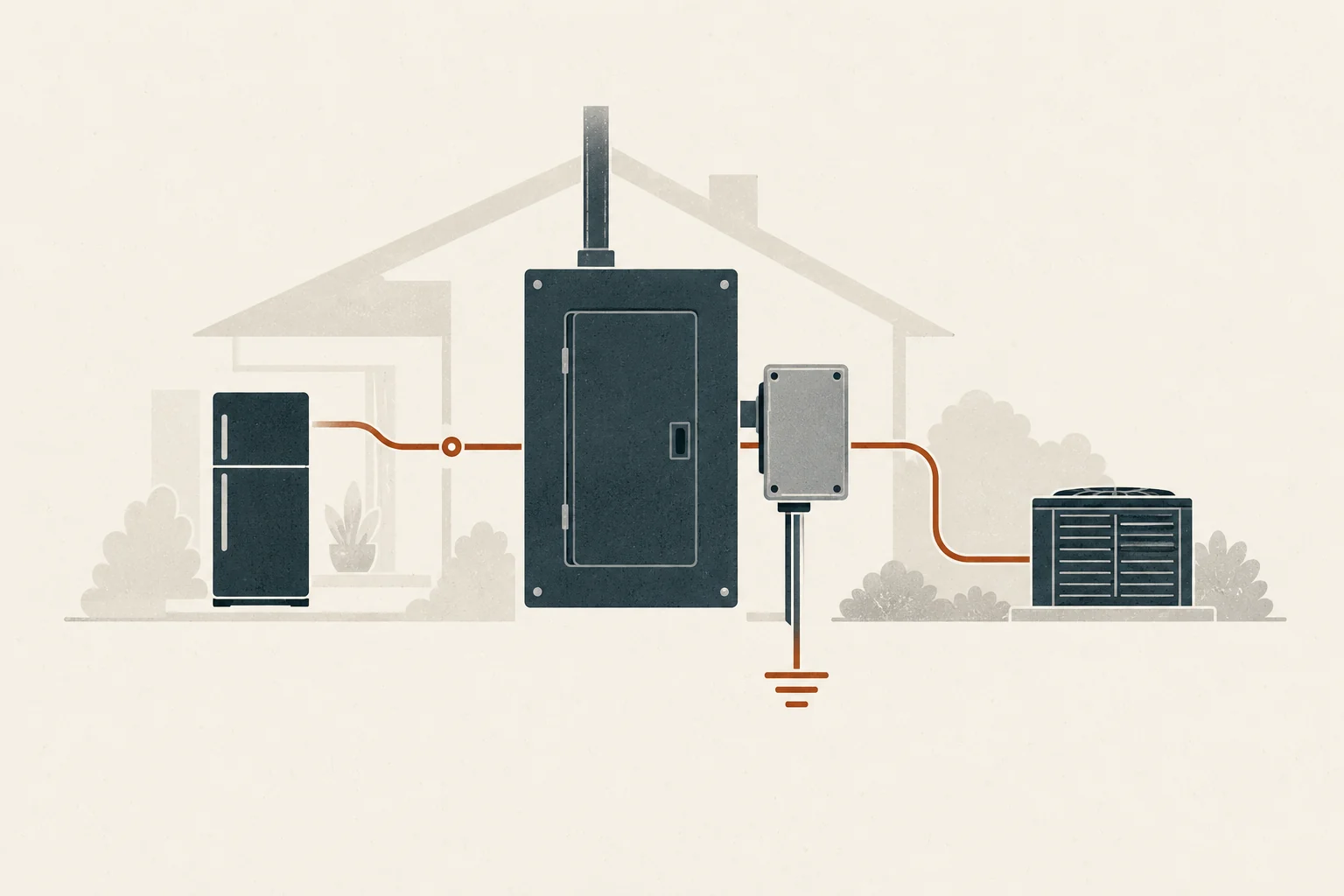
Straight answers first
A correctly selected and installed SPD can reduce the voltage stress that brief surges place on wiring and connected electronics.
Service or panel protection and listed point-of-use devices have different jobs. The strongest plan coordinates both where needed.
No ordinary surge protector guarantees survival from every event or substitutes for grounding, bonding, maintenance, or a lightning-protection system.
Choose your next question
Weigh electronics, storm exposure, project timing, existing layers, cost, and honest limitations.
Review the signs and tradeoffsTranslate Type 1, 2, and 3, VPR, In, SCCR, protection modes, enclosure, and monitoring.
Use the compatibility checklistPrepare for assessment, product fit, shutdown, permit questions, verification, cost factors, and handoff.
Plan the installationBuild appropriate layers for HVAC, appliances, electronics, and other expensive connected systems.
Explore equipment protectionLayered by location
The SPD type describes where and how a device is evaluated for use—not a simple good, better, best ranking.
1
Type 1 devices may be used in permitted locations on the supply side or load side of the service disconnect, subject to listing and instructions.
2
Type 2 devices are installed on the load side of the service disconnect, commonly at a distribution panel.
3
Type 3 devices add protection near selected equipment and may address signal paths when specifically designed for them.
Build the foundation
Learn what an SPD does, how the layers fit, what ratings mean, and where professional installation begins.
Read the homeowner’s guideUnderstand why a larger kA headline cannot replace compatibility, VPR, SCCR, modes, and status indication.
Translate the specification sheetCompare current whole-house candidates by documented fit and tradeoffs rather than popularity alone.
Compare current candidatesPlan safely
Record the panel label and exterior, indoor or outdoor location, major connected systems, and recent electrical work only when safely accessible. Let the electrician verify the interior, available fault current, placement, permits, and exact connection requirements.
See cost factors and quote questionsHow recommendations are made
Type, location, system configuration, panel compatibility, SCCR, and enclosure come first.
VPR, nominal discharge current, modes, and surge-current figures are compared only in the same context.
Status indication, current product lifecycle, instructions, warranty conditions, and checked dates stay visible.
Protect the equipment that matters
Compare equipment-side HVAC protection with the upstream whole-home layer.
Explore HVAC protectionPlan appropriate protection for refrigerators, laundry, cooking, entertainment, networking, and smart-home devices.
Build an appliance protection planEvidence before certainty
We prioritize standards bodies, safety organizations, government material, and current manufacturer documentation. Material changes receive a new review date, and corrections stay easy to request.
This live collection is limited to materially reviewed, published guidance.

Damage & Recovery
Surge Protector Warranty: Build a Claim Evidence PacketStart Here
What Is Whole-Home Surge Protection? A Homeowner’s GuideLearn what whole-home surge protection does, where it fits, what it cannot stop, and how to plan a layered system with a qualified electrician.

Choosing Protection
How to Choose a Whole-House Surge ProtectorChoose a whole-house surge protector by system compatibility, permitted type, VPR, In, SCCR, modes, enclosure, status, installation, and warranty.
Equipment Protection
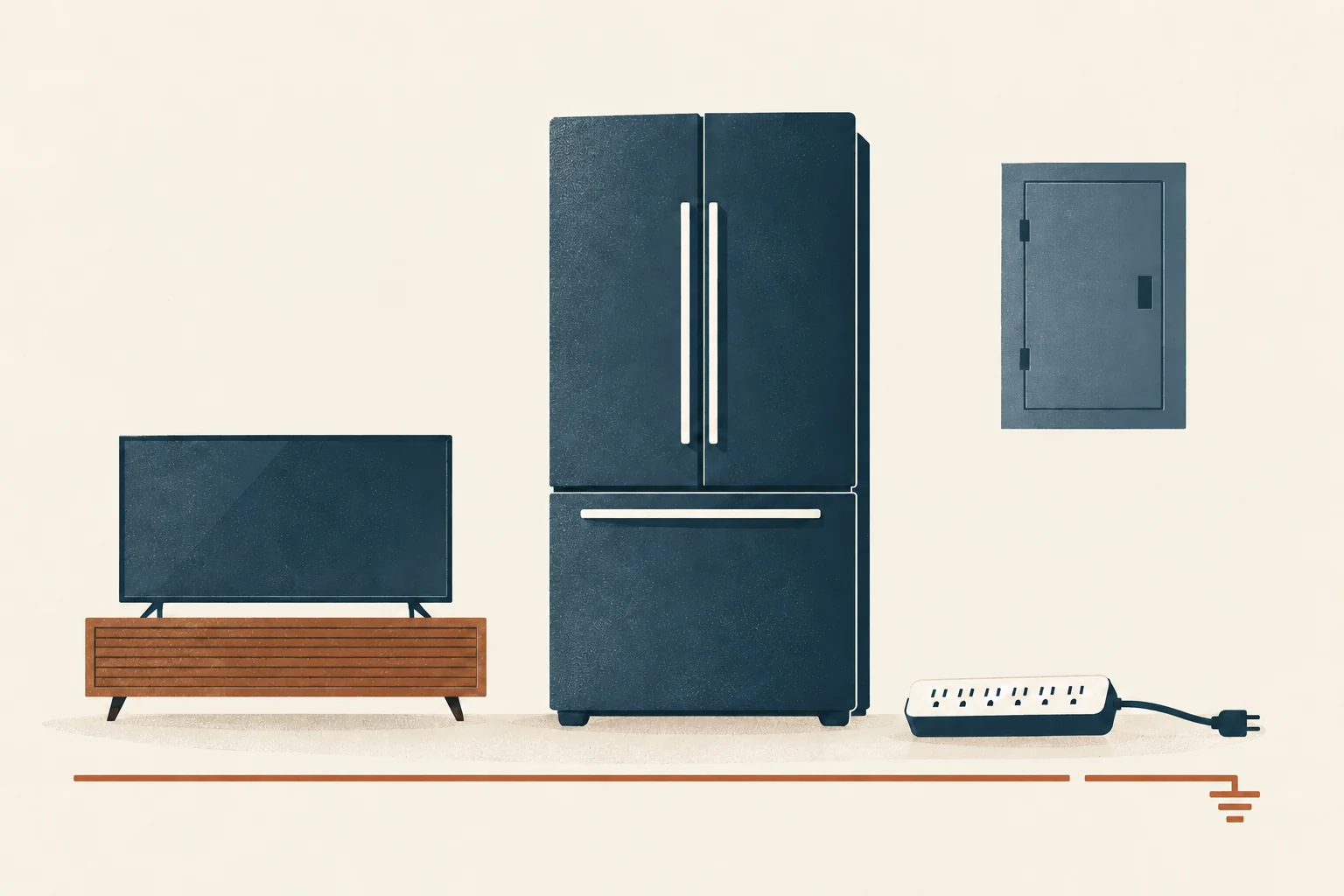
Surge Protection for Home Appliances: A Layered Guide